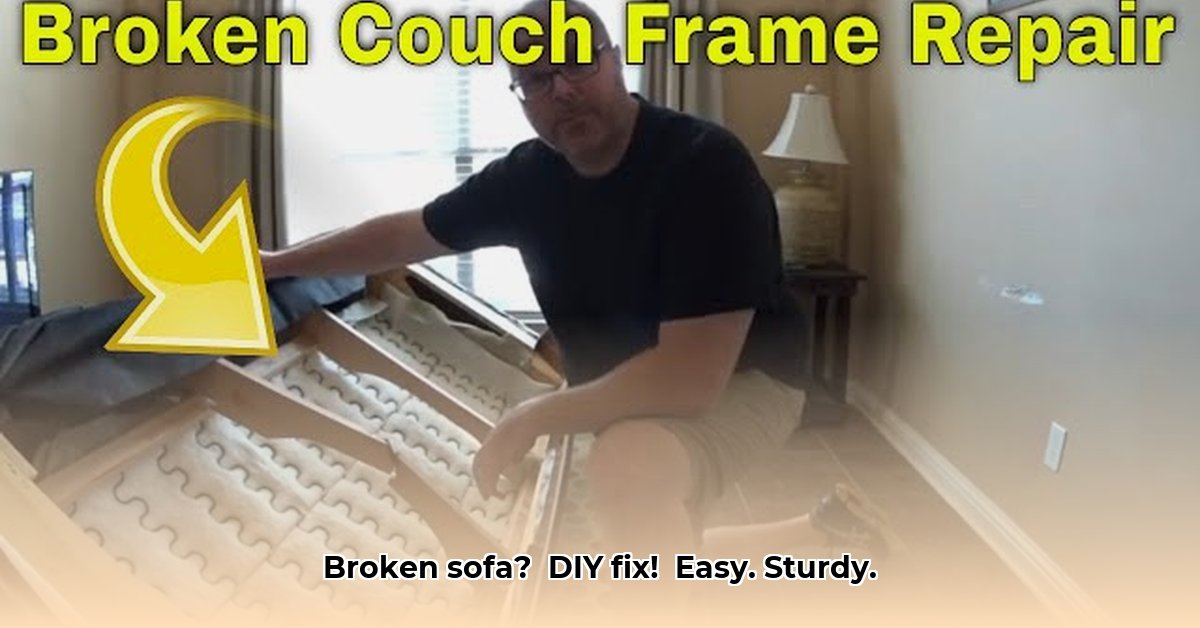
That comfy sofa you love showing its age with a wobbly leg or cracked frame? Before you replace it, consider a DIY repair! This guide shows you how to fix common sofa frame problems yourself – saving you money and hassle. We'll cover assessing the damage, gathering tools, repairing wooden and metal frames, reattaching upholstery, and preventing future issues. Let's get your couch feeling brand new!
Assessing the Damage: A Crucial First Step
Before you grab your tools, carefully examine the broken sofa frame. Where is it broken? Is it wood or metal? How severe is the damage? Snapping photos helps. Note the wood type (hardwood is stronger than softwood, influencing screw and glue choices). Removing cushions might be necessary to see the full extent of the damage. Don't skip this step – a proper assessment is key to successful repair. Isn't it surprising how often a simple inspection can save time and effort?
Gather Your Tools and Materials
The tools you need depend on the break's type and severity. Minor repairs might only require wood glue and clamps. Major repairs could necessitate wood screws, metal brackets, sandpaper, wood filler (for wooden frames), a staple gun (for upholstery), or metal epoxy and bolts (for metal frames). Safety glasses and work gloves are essential. Remember, safety always comes first!
Fixing a Broken Wooden Frame: A Step-by-Step Guide
This section details repairing a broken wooden sofa frame. The process involves several crucial steps:
Clean the Break: Thoroughly clean the broken area, removing any loose wood fragments. This ensures better adhesion.
Apply Wood Glue: Use high-quality wood glue, applying a generous amount to both broken surfaces. A strong bond is crucial for a lasting repair.
Secure with Clamps: Firmly clamp the pieces together, ensuring even pressure. Let the glue dry completely (at least 24 hours).
Reinforce (If Necessary): For severe breaks, reinforce with strong wood screws. Pre-drill pilot holes to prevent wood splitting.
Fill and Smooth: Once dry, use wood filler to fill gaps or holes. Sand smooth after the filler dries. You can refinish the wood if desired. Did you know that proper sanding significantly improves the final look and feel?
Repairing a Metal Frame: A Different Approach
Metal frame repair differs slightly:
Clean the Area: Thoroughly clean the broken area, removing rust or dirt. This improves the epoxy's bond.
Apply Metal Epoxy: Use a strong metal epoxy, following the manufacturer's instructions precisely. Drying times vary among epoxies.
Support and Secure: While the epoxy dries, use clamps to hold the pieces in place. This prevents shifting and ensures a proper cure.
Reinforce (Optional): Add metal plates or brackets for extra support once the epoxy sets, securing them with bolts.
Reattaching the Upholstery: The Finishing Touch
Once the frame is fixed and the adhesive is dry, reattach the upholstery. Use a staple gun carefully, pulling the fabric tight to avoid wrinkles. Damaged upholstery might need patching or replacement. Remember, patience is key when working with upholstery!
Preventing Future Problems: Sofa Maintenance
Regular inspections prevent future frame breaks. Check for wobbly legs, loose screws, or cracks. Tighten loose screws regularly. Avoid overloading and excessive strain on your sofa. Regular maintenance can significantly extend the lifespan of your furniture.
Weighing Your Options: DIY vs. Professional Repair
| Pros of DIY Repair | Cons of DIY Repair |
|---|---|
| Cost savings | Requires time and effort |
| Eco-friendly (less landfill waste) | Requires specific tools and skills |
| Sense of accomplishment | Repair might not be as strong as professional work |
| Increased knowledge about your sofa | Mistakes can lead to further damage |
Remember, if you're uncomfortable with any step, a professional furniture repair person is always a viable option. But with patience and care, you can likely extend your sofa's life considerably!
How to Repair a Sunken Couch Frame Using Wood Filler
This section focuses on repairing sunken areas in a couch frame using wood filler :
Assess the Damage: Carefully examine the sunken area; its depth and severity determine your repair strategy.
Gather Supplies: You'll need wood filler, wood glue (strong, interior-grade), sandpaper (various grits), putty knife, clamps, wood screws (if needed for reinforcement), a brush and matching paint (optional), safety glasses, and gloves.
Repair the Sunken Area: Clean the area, apply wood glue to cracks, and carefully fill the depression with wood filler. Let it dry completely, then sand it flush. Reinforce with screws if necessary. Finish with matching paint, if needed.
Prevent Future Problems: Regularly inspect your sofa and ensure even weight distribution. Consider using supporting cushions and regularly tightening screws.